
Group Reflection

I. DESCRIPTION OF THE INSTITUTION’S VISION-MISSION STATEMENT
Thái Bình Dương University
Regarding Thái Bình Dương University’s vision, it is clear that the institution aspires to establish itself as a leading coastal university, renowned for attracting exceptional faculty and students. This vision emphasizes the importance of maintaining an educational environment rooted in integrity and meeting international standards. Such a commitment to quality and ethical education highlights the university’s dedication to fostering academic excellence and global competitiveness.

The university’s mission focuses on the holistic development of its learners. By imparting and expanding knowledge, Thái Bình Dương University aims to prepare students for self-reliance in both their personal and professional lives. This preparation is crucial in today’s rapidly changing global economy and technological landscape. The mission also highlights the importance of cultivating useful and happy citizens who contribute to sustainable local and societal development. This reflects the university’s broader commitment to social responsibility and community engagement, ensuring that its graduates are not only skilled professionals but also conscientious individuals dedicated to positive societal impact.

Naval Academy
In terms of the Naval Academy's vision, it is evident that the institution aspires to become a premier center for military education that is revolutionary, regular, elite, and modern. This vision underscores the academy's commitment to continuously advancing its educational and training standards to meet the evolving needs of the Navy. By emphasizing modernization and excellence, the academy aims to play a crucial role in safeguarding national maritime sovereignty. This commitment highlights the academy’s strategic importance and its dedication to national defense.

The mission of the Naval Academy is centered on providing comprehensive education and training that equips cadets with essential skills and knowledge for naval operations. This mission stresses the importance of developing high-quality military officers who are proficient and capable of navigating the complexities of modern warfare. The integration of practical training with theoretical knowledge ensures that graduates are well-prepared to serve effectively in the Navy. The academy's focus on loyalty, integrity, and professionalism reflects its dedication to instilling these core values in its officers.

II. APPLICATION OF TESOL/ELT KNOWLEDGE

Engaging with diverse topics from the workshop, we reinforced the interconnectedness of effective language teaching. From the intricacies of corrective feedback to the importance of acknowledging bilingual identities, we gained a richer understanding of how to cater to our students’ holistic learning needs. The exploration of adapting frameworks namely CEFR (Common European Framework of Reference for Languages) and the discussions on tackling challenges like collocation acquisition provided practical tools to address local contexts. The workshops also highlighted the power of innovative approaches such as inquiry-based learning and technology-assisted techniques to make language acquisition engaging and effective. This comprehensive exposure to the field motivates us to continuously adapt and integrate these valuable insights into our teaching practice.
Besides, the workshop gave us a chance to present the topic “Global Englishes: Practical Considerations for Foreign Language Education Policies” which provided a valuable opportunity to explore the multifaceted nature of English in today’s world. By delving into the concepts of Global Englishes, we highlighted the significance of acknowledging the diversity of English varieties. The presentation effectively unpacked the key arguments for embracing Global Englishes in foreign language education. We emphasized the importance of exposing learners to various accents and fostering adaptability in communication. The research on the positive impact of Global Englishes awareness-raising activities on student confidence and linguistic identity was particularly insightful. We also acknowledged the challenges associated with integrating Global Englishes into the Vietnamese curriculum. We identified student resistance, teacher beliefs, and limited access to diverse teaching materials as significant hurdles. The discussion of these challenges resonated with the audience, sparking lively dialogue about potential solutions. Our proposed solutions focused on incorporating Global Englishes principles into pedagogy while acknowledging local contexts. We highlighted the importance of curriculum design that considers students’ learning goals and future English use scenarios. Additionally, we emphasized the role of teachers in promoting awareness and acceptance of diverse Englishes.

Our group’s microteaching experience was a valuable opportunity to put TESOL/ELT principles into practice. We prioritized considering the students’ cultural background and knowledge by adapting coursebook materials. This involved using familiar Vietnamese restaurant types and Nha Trang’s local cuisine instead of generic options. By grounding the lesson in their cultural context, we aimed to make the learning experience more relatable and engaging. Focusing on TBD university students, we recognized their educational background and opted for the deductive method for grammar instruction. This involved presenting an example of indefinite pronouns, explaining their usage, and providing additional examples. To further solidify understanding, we incorporated authentic context by having students read a restaurant advertisement. Our goal was to develop both grammar and speaking skills. To achieve this, we employed a balanced approach, offering students both content and language support. For content support, we provided vocabulary related to expressing reasons for dining choices. For language support, we offered controlled practice through sample role-play dialogues. Recognizing the students’ varying levels and time limitations, we opted for a semi-controlled practice activity where they could express reasons for choosing a restaurant.
Throughout the lesson, we strived to create a relaxing and positive learning environment. This included maintaining appropriate physical space with students, while also being readily available to offer support. We utilized engaging activities, realia, pictures, attractive presentations, and handouts. Further enhancing student participation, we employed various grouping arrangements, including whole-class instruction, individual work, pair work, and group work. Additionally, we ensured clear instructions, maintained a confident presence, and adeptly managed teaching time according to the lesson plan.


Through the observation in the previous session, we realized the students were interested in interactive activities such as teamwork and tasks designed by online tools. Therefore, we tried to transfer activities in the textbook into fun ones. The students were highly engaged throughout the lesson despite the long duration of the session. All five groups tried their best to complete the assignments within the set time. Before reflecting the groups’ products, we gave each group a chance to give comments and feedback for their peers. Seeing how others are assessed helps students reflect on their own work. They can compare their methods to the task with their peers' and identify areas for improvement. The main reason for having students assess each other's work was to give them feedback. This feedback can come in different forms: it might agree with what they have done, suggest improvements, or even point out mistakes. If students take this feedback seriously and approach it with a positive attitude, it can help them learn more and make fewer errors (Topping, 2009).

Moreover, since the class is at pre-intermediate level, sometimes we use Vietnamese as a quick translation to help solidify the students’ understanding. For instance, we code-switched in giving instructions to save time and to make sure the class can follow easily. We also used examples withdrawn from the vocabulary and knowledge in the previous lessons to clarify the meaning of unfamiliar words, e.g., we listed shrimps, fish, and crabs as food served in a seafood restaurant. The students,then, understood what we intended to say easily.

As for the seminar session, we intended to share useful information as well as our own experience on learning English, particularly improving reading skills. We chose to present certain techniques such as predicting, finding connections, picturing, inferring, questioning, and summarizing as they can help readers better understand what they are reading (Block & Israel, 2005). Globally, Technology-Assisted Language Learning (TALL) has seen remarkable advancements and widespread adoption in recent years. Modern TALL integrates cutting-edge technologies such as artificial intelligence, adaptive learning systems, and interactive multimedia to create highly personalized and engaging learning experiences. According to Beckett (2006), technology can be utilized for a variety of targeted language learning activities, including practicing speaking, enhancing reading abilities, and developing writing skills. There have been numerous online platforms that facilitate learners' practical language skills and reading competence. We selected certain websites and apps that are user-friendly like Readlang, BBC, News in Levels, Loyal books, English Online, Many things to introduce to the students so that they can easily access and maintain their motivation in learning English.
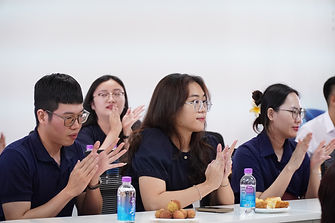
The participants for this session were non-English major students from Naval Academy. We were informed that the students’ English proficiency is pre-intermediate level, so the content was carefully simplified for the audience to catch up. However, the number of participants for this session was quite large, we had to be flexible in presenting the content, i.e., we code-switched frequently for difficult terms and for shorter instructions in the warm-up stage. The students in the Naval Academy showed their enthusiasm and actively participated in every activity that we organized, which lessened our tension while presenting in such a formal event.
Individual Reflection

Đoàn Ngọc Phúc Anh

Birthday: May 9th, 1999
Student ID: 22814011101
Brief introduction about myself:
I am a teacher at ZIM English Center with almost 3 years of teaching experience. I am passionate about guiding students to achieve their language learning goals. My teaching philosophy emphasizes creating a supportive and interactive environment where students can develop their language skills confidently and effectively.
PROFESSIONAL SKILLS I HAVE LEARNT FROM THE PRACTICUM
My practicum experience at Thai Binh Duong University and the Naval Academy in Nha Trang was transformative, providing a fertile ground for the cultivation of crucial professional skills essential for my career in education.
One of the most significant gains from my practicum was the development of analytical and assessment skills. Working closely with students allowed me to analyze their individual characteristics and learning styles, which proved invaluable in tailoring my teaching strategies to meet their diverse needs effectively. During role-play activities and demo teaching sessions, I learned to assess students' performance objectively, identifying strengths and areas needing improvement. This process of continuous assessment and adjustment was instrumental in enhancing learning outcomes and fostering student engagement.
Effective planning emerged as a cornerstone of my practicum experience. From meticulously crafting microteaching lessons to organizing and presenting a poster at a workshop, I learned the importance of thorough preparation in achieving educational goals. Planning not only ensured the coherence and flow of my lessons but also empowered me to anticipate challenges and adapt teaching strategies accordingly. This skill was crucial in maintaining classroom momentum and maximizing instructional time. Although there were some challenges throughout the process when our group had to organize and refine the lesson plan (such as time limitations, the inharmonious flow of the tasks, and students' actual levels), we overcame and curbed all the difficulties.
Communication proficiency emerged as a fundamental aspect of my growth during the practicum. Engaging with peers, students, and faculty members at Thai Binh Duong University and the Naval Academy allowed me to refine my ability to articulate ideas clearly and persuasively. I learned the art of active listening, which enabled me to respond effectively to students' questions and concerns. Moreover, adapting my communication style to suit different audiences enhanced my ability to build rapport and establish meaningful connections within the academic community. These skills were pivotal in creating a supportive and inclusive learning environment where students felt valued and motivated to participate actively.
Teaching English in a local context deepened my appreciation for cultural competency. Interacting with students from diverse backgrounds allowed me to acknowledge the importance of understanding cultural nuances in educational settings. I became more attuned to the impact of cultural factors on learning preferences and classroom dynamics. Embracing intercultural awareness not only enriched my teaching approach but also promoted mutual respect and appreciation among students from varying backgrounds. This experience broadened my perspective and reinforced my commitment to fostering an inclusive educational environment that celebrates diversity.
The practicum provided ample opportunities for me to develop essential leadership qualities. Adapting to different classroom environments required flexibility and resilience in managing unexpected challenges. I learned to navigate classroom dynamics effectively, maintaining discipline while encouraging student participation and collaboration. Demonstrating social responsibility became integral to my role as an educator, as I recognized the profound influence of my actions on students' academic and personal development. These leadership skills were instrumental in creating a supportive and empowering learning environment where students could thrive and achieve their full potential.
In conclusion, my practicum experience at Thai Binh Duong University and the Naval Academy was a transformative journey that significantly enriched my professional growth as an educator. The analytical, planning, communication, cultural competency, and leadership skills I acquired have equipped me with a robust foundation for navigating the complexities of teaching and learning. This experience not only reinforced my passion for education but also instilled a commitment to continuous improvement and lifelong learning in pursuit of excellence in the field of education.
CHANGE IN BEHAVIOR AND PERCEPTION
My practicum at Thai Binh Duong University and the Naval Academy in Nha Trang not only equipped me with essential professional skills but also profoundly altered my behavior and perception as an educator. This transformative experience has reshaped my approach to teaching, my understanding of student diversity, and my overall attitude toward educational responsibilities.
One of the most significant behavioral changes I observed in myself was the shift towards a more student-centered teaching approach. Initially, my teaching methods were more instructor-focused, driven by a desire to cover the curriculum thoroughly. However, through analyzing and assessing students' characteristics and performances, I realized the importance of adapting my teaching strategies to cater to individual learning needs. This shift not only improved student engagement but also fostered a more dynamic and interactive classroom environment. I now prioritize understanding each student's unique learning style and adjusting my methods to ensure that all students can succeed.
The practicum also helped me to acknowledge the importance of meticulous planning and organization in teaching. My behavior in terms of lesson preparation has become more structured and detail-oriented. I learned to anticipate potential challenges and devise plans, which has significantly reduced classroom disruptions and enhanced the overall learning experience. This proactive approach to planning has become an integral part of my teaching routine, ensuring that my lessons are well-organized and effectively delivered.
Effective communication emerged as a crucial component of my teaching practice. Before the practicum, I often relied on a one-size-fits-all communication style. However, my interactions with peers, students, and faculty at Thai Binh Duong University taught me the importance of adapting my communication to suit different audiences. I have become more adept at active listening and empathetic responses, which has improved my rapport with students and colleagues. This change has not only enhanced classroom interactions but also created a more supportive and inclusive learning environment.
My perception of student diversity has undergone a significant transformation. Previously, I viewed cultural and individual differences as challenges to be managed. However, my experience at Thai Binh Duong University has taught me to see these differences as valuable assets that enrich the learning experience. I now recognize the importance of cultural competency and the role it plays in creating an inclusive classroom. This shift in perception has motivated me to continually seek ways to celebrate and integrate diverse perspectives into my teaching.
The practicum deepened my appreciation for intercultural awareness in education. Teaching English in a local context revealed the profound impact of cultural factors on learning processes. I realized that effective teaching requires more than just knowledge of the subject matter; it demands an understanding of students' cultural backgrounds and how these influence their learning experiences. This new perception has encouraged me to become more culturally sensitive and to strive for an inclusive teaching approach that respects and values diversity.
My understanding of leadership in education has also evolved. Initially, I viewed leadership as primarily about maintaining classroom discipline and delivering content effectively. However, the practicum experience highlighted the broader responsibilities of an educator, including social responsibility and the ability to inspire and motivate students. I now see myself as a guide and mentor, committed to supporting students' academic and personal growth. This change in perception has reinforced my commitment to fostering a positive and empowering learning environment.
In conclusion, the practicum at Thai Binh Duong University and the Naval Academy has been a catalyst for significant changes in both my behavior and perception as an educator. The shift towards a student-centered approach, enhanced planning, and improved communication skills have transformed my teaching practice. Moreover, a deeper understanding of student diversity, intercultural awareness, and leadership responsibilities has reshaped my perception of what it means to be an effective educator. This experience has not only enriched my professional development but also inspired a renewed passion for teaching and a commitment to continuous improvement in my educational journey.

Đỗ Thị Kim Chi
Birthday: June 18th, 1997
Student ID: 22814011109
Brief introduction about myself:
I have had the joy of teaching English to young learners in online classes for the past four years. My teaching philosophy is that "Learning a new language is like embarking on an adventure. Together, we'll explore new territories and make every step of the journey both educational and fun!"

The recent Practicum trip to Nha Trang City with my distinct professors and fellow Master of Arts classmates was a profoundly enriching experience. The diverse activities I participated in the Practicum trip provided ample opportunities for growth and development. This portfolio outlines the key areas of learning I achieved during this trip, focusing on assessment skills, planning skills, communication skills, cultural competency, and leadership skills. Since that, I am aware there are some changes in my behaviors and perceptions.
PROFESSIONAL SKILLS I HAVE LEARNT FROM THE PRACTICUM
Assessment skills
In terms of the assessment skills, I learn most in the micro-teaching conducted at Thai Binh Duong University. This session starts with warm-up activity by Ms. Khanh, who surprises me a lot. Typically perceived as a quiet individual, her energy during presentations is remarkable. She exudes confidence and demonstrates great patience with her students, most of whom are shy and possess low proficiency. Recognizing this, she encourages the learners to speak, actively seeks to understand their ideas, and provides immediate, yet gentle, feedback. This approach helps alleviate their nervousness and encourages them to participate more actively. Ms. Khanh's voice is clear and sufficiently loud, even without a microphone, ensuring she captures every student's attention. A particularly impressive moment was when all groups presented their answers for the task during the matching game. This activity broke the class's quiet atmosphere and energized the students for subsequent activities.
Next, addressing the Grammar section in the micro-teaching session, it is often challenging to create an atmosphere as engaging as the previous activities. However, Ms. Han remained composed in managing various classroom incidents. When students struggled with tasks and couldn't answer questions, Ms. Han maintained her calm demeanor and effectively handled the awkward atmosphere. She gently guided the students, providing step-by-step instructions to complete the tasks. Her clear voice and comprehensible instructions facilitated understanding. Additionally, she managed time efficiently, ensuring the Grammar section concluded within the allotted time frame.
Mr. Hau and Ms. Phuc Anh were responsible for teaching speaking skills. Despite the students' low proficiency and shyness, our peers made commendable efforts to encourage participation. By organizing group work, they provided students with opportunities to speak without feeling overly self-conscious. The instructors remained calm and patient when students faced difficulties with speaking exercises. They offered slow and steady guidance to help students complete conversations, providing feedback as needed. This feedback was gentle, easy to understand, and often delivered with a touch of humor, further easing the students' anxiety.
Through the performance in the micro-teaching session, the team exhibited professionalism and dedication, effectively engaging students and maintaining a supportive learning environment throughout the micro-teaching session. My teammates meticulously follow the lesson plan, ensuring that all activities are conducted within the allotted time, which I need to equip for future presentation. Moreover, their ability to engage students and maintain a dynamic classroom environment is commendable. Another thing I learn from my teammates is their confidence and calm attitude in any case, which partly builds up from the detailed lesson plan. In addition, working with my group, I realize that the optimistic attitude is the personality I have to equip myself to not only help me overcome difficulties I encounter in my teaching career but also my daily life.
Planning Skills
One of the skills I have learned from the Practicum trip to Nha Trang City is planning skills. It cannot be denied that planning for the field trip takes much effort and time. To ensure everything proceeded smoothly, planning is extremely necessary. Honestly, although I was not directly responsible for organizing the field trip, I gained a comprehensive understanding of the planning process through observation and participation. The extensive efforts required to coordinate logistics, secure accommodations, arrange transportation, and schedule activities highlighted the importance of meticulous planning. Besides, activities such as micro-teaching, seminars and workshops cannot be successfully conducted without planning. What I am impressed most is that my group has held numerous “midnight" online meetings to design our lesson plan for the micro-teaching. Even though we have different timelines, we all tried our best to spend time working, planning together to create the most “practical and appropriate” lesson plan for the micro-teaching. This experience provided me with a genuine sense of teamwork. Each member was involved in every part of the planning process, contributing ideas and discussing problems collectively. It wasn't a matter of dividing tasks and simply combining them at the end; instead, we worked together to ensure a cohesive and well-thought-out plan. As a result, our group completed the micro-teaching within the allotted time and executed the planned activities effectively.
Beyond academic activities, my involvement in the Gala Operation team for the Gala dinner added a layer of personal growth. To have a successful Gala dinner, planning is extremely important. Although my role as contributing my voice to songs and enlivening the Gala atmosphere was minor, I can learn planning skills through observing and participating in planning activities.
Prior to the Practicum trip, our team met to discuss song selection, arrange performances, and plan rehearsals to ensure seamless and cohesive performances. Before the Gala dinner, our team visited the restaurant where the Gala was held to rehearse and conduct technical setup, ensuring high-quality audio during performances. Due to time constraints, we even had to do our makeup en route to the restaurant, leading to amusing moments like when a teammate forgot to apply lipstick. Having never participated in event planning before, joining the Gala Operation team provided me with an excellent opportunity to train myself in event planning. This experience has significantly boosted my confidence in planning and executing events, preparing me to handle such tasks more effectively in the future.
Communication Skills
Effective communication was paramount throughout the practicum. During the preparation phase, I developed the ability to listen actively and empathetically to professors, classmates, and the teachers at Thai Binh Duong University. This skill was crucial for modifying lesson plans, seminars, and workshops to meet the needs of our students and ensure a cohesive learning experience. Working in groups further enhances my communication abilities. In meetings to revise the lesson plan, discussions and the sharing of opinions sometimes led to disagreements. However, we adhered to the principles of improving group work and respecting others. This respectful and constructive communication was instrumental in refining our plans and achieving our goals.
The Gala dinner provided another opportunity to improve my communication skills. I had to collaborate with classmates with whom I had not previously worked. As an introvert, I initially thought it would be challenging to communicate with new team members. However, this experience taught me that stepping out of my comfort zone and embracing new environments can lead to new joys and make it easier to communicate with others. Overall, these experiences have significantly improved my ability to communicate effectively in various settings, fostering a collaborative and productive atmosphere.
Cultural Competency Skills
The Practicum provided a unique opportunity to enhance my intercultural awareness and competency, particularly in the context of teaching English. Insights from lecturers at Thai Binh Duong University illuminated notable differences between students in Nha Trang and those in Ho Chi Minh City. This experience was pivotal in broadening my understanding of how cultural and regional variations impact teaching methods and student engagement.
My primary teaching experience involves online classes with young children, where I predominantly use Total Physical Response (TPR) to maintain their energy and engagement. These students are typically active, comfortable sharing their ideas, and unafraid of making mistakes. I use both English and Vietnamese equally to instruct these beginner-level learners, ensuring they understand the content and feel supported. In contrast, the students at Thai Binh Duong University appeared shy, had low English proficiency, and favored interactive activities. Observing these students required me to adjust my teaching methods to better suit their needs. For instance, I incorporated more grammar translation techniques to ensure comprehension and engagement. Additionally, recognizing their shyness and lower proficiency, I facilitated group work to provide them with a more comfortable environment to discuss ideas and solve problems collaboratively. This approach helped them gain confidence and participate more actively.
Teaching in an offline setting with diverse groups of learners required me to raise my intercultural awareness and adapt my teaching methods accordingly. This experience has significantly enriched my cultural competency, enabling me to tailor my teaching strategies to meet the unique needs of different student populations effectively.
Leadership Skills
The trip also highlighted the essence of leadership in education. Adaptability is necessary to run the micro-teaching well. In fact, before the practicum trip, the students' level is noticed and the lesson plan is designed to be the most appropriate with students. However, after the observation at Thai Binh Duong University, a modification for the lesson plan is compulsory. The tasks had been designed to suit students’ level but there is a worry that students with low proficiency may take them longer to finish tasks; therefore, tasks in the lesson plan need to be cut or changed with the wish that the students can do and engage to do.
Moreover, insights from the local teacher emphasized the necessity of using Vietnamese extensively in class, around 60-70%, and even up to 80-90%, particularly during early morning sessions when student participation tends to be lower. To address this, more engaging interactive activities were introduced, supplemented by incentives to enhance student involvement and alleviate the subdued classroom atmosphere. Furthermore, when observing group 1.1’s presentation, there is an agreement that code switching is not appropriate for the context. As previously advised by local educators, maintaining a consistent use of Vietnamese in teaching is paramount.
Furthermore, presenting at the Naval Academy seminar prompted a reconsideration of my presentation style. While my initial approach lacked interactive elements, observing others' presentations inspired me to engage students actively. Incorporating questions and discussions into my sessions proved effective in capturing students' attention and fostering a more dynamic learning environment. Thanks to adaptability, my performance can be improved and become less boring.
CHANGE IN BEHAVIOR AND PERCEPTION
The recent Practicum trip to Nha Trang City was an enlightening journey, both professionally and personally. The diverse activities and interactions with esteemed professors, fellow Master of Arts classmates, and the faculty and students at Thai Binh Duong University and Naval Academy have significantly influenced my behavior and perception.
One of the most notable changes in my behavior is an increase in confidence and proactivity. Observing the confident and composed demeanor of my peers during micro-teaching sessions, inspired me to adopt a similar approach. Their ability to engage students effectively, despite challenges, demonstrated the importance of confidence in teaching. Additionally, the trip has enhanced my patience and empathy. The way my colleagues patiently guided students with low proficiency and shyness left a lasting impression on me. I learned the value of understanding students' needs and providing gentle, constructive feedback. This shift has made my teaching more student-centered, fostering a supportive and encouraging learning environment. I now prioritize patience and empathy in my interactions, aiming to create a classroom atmosphere where all students feel valued and understood.
Another significant behavioral change is the adoption of an optimistic attitude. The positive and solution-oriented mindset of my teammates during the planning and execution of activities has influenced my outlook on challenges. I have learned to view obstacles as opportunities for growth and have embraced a more optimistic approach in both my professional and personal life. This change has helped me remain composed and solutions-oriented, even in difficult situations. Moreover, initially struggling with teaching university students, I have since come to appreciate the learning derived from stepping out of my comfort zone. Exposure to diverse educational settings revealed the flexible nature of teaching strategies, prompting me to embrace adaptability as the basis for effective instruction.
The Practicum trip has deepened my appreciation for detailed planning. The extensive efforts required for coordination highlighted the importance of thorough preparation, leading me to adopt more structured planning techniques in my teaching and event coordination. Interacting with students at Thai Binh Duong University has also enhanced my cultural competency, enabling me to adjust my teaching methods to suit diverse student needs. The collaborative nature of the trip underscored the value of teamwork. I learned that successful outcomes are often the result of collective effort, reinforcing the importance of active participation and mutual support in group settings.
Reflecting on my contributions during the Practicum trip, I recognize several positive impacts. Firstly, I was actively involved in all activities, demonstrating my commitment to the group's success. My consistent engagement ensured that I was an integral part of the team, contributing to the smooth execution of all events. Effective communication was another key contribution, facilitating smooth collaboration and a cohesive environment. Lastly, my adaptability in modifying lesson plans based on feedback and observation ensured the activities were well-suited to the students' proficiency levels.
In conclusion, the Practicum trip to Nha Trang City has been a catalyst for significant changes in my behavior and perception. The skills and insights gained have enhanced my professional competencies and personal growth, preparing me to navigate future challenges with resilience and optimism. From micro-teaching sessions to workshops, seminars and gala dinner, each experience has enriched my journey in the realm of TESOL. Equipped with newfound insights, skills, and a heightened sense of social responsibility, I am eager to transform these experiences into my ongoing pursuit of becoming an adept and empathetic English language educator. Through active participation in various activities, I have developed a deeper understanding of the importance of confidence, teaching skills, and thorough preparation. This self-evaluation reflects my journey of growth and the profound impact this practicum has had on my personal and professional development.


Nguyễn Ngọc Hân
Birthday: August 24th, 1999
Student ID: 22814011118
Brief introduction about myself:
I have been working as an English teacher for 3 years, primarily teaching online classes. My teaching philosophy is that education is not just about imparting knowledge but also about inspiring and motivating students to love the subject. This, in turn, promotes their ability to study independently.
The three-day trip to Nha Trang, a well-known beach city in Vietnam, was an unforgettable experience that enriched my life. It allowed me to deepen my knowledge about the place, the local food, and the people. During the trip, I had the opportunity to attend a workshop at Thai Binh Duong University (TBD), participate in a micro-teaching session in a new classroom setting at TBD, attend a seminar at the Vietnam Naval Academy, and enjoy a Gala dinner. Most importantly, the trip enabled me to learn many new things and expand my network with a diverse group of people. I gained not only professional skills but also experienced significant personal growth, altering my behavior and perceptions. This reflection paper aims to detail what I have learned and how I have changed as a result of this trip.
PROFESSIONAL SKILLS I HAVE LEARNT FROM THE PRACTICUM
Analytical and Assessment skills
The practicum provided me with the opportunity to observe my peers’ microteaching presentations, which was an invaluable experience for honing my analytical and assessment skills. Despite some minor language use mistakes, I gained numerous insights from their teaching practices. My peers demonstrated excellent preparation, not only in their teaching aids but also in their professional attire suited for the classroom setting. A striking observation was the transformation of some teammates. While some appeared gentle and soft-spoken in group discussions, they became energetic and enthusiastic when teaching. This adaptability underscored their dedication to the teaching role. Besides, All my teammates showcased strong teaching skills. They maintained clear voices and provided concise explanations, effectively managing their time to adhere to the lesson plan. During their lessons, they remained dynamic, pacing the classroom to support students promptly. Their efforts to create a friendly and engaging learning environment were evident. Throughout the lessons, students experienced various groupings, which facilitated engagement in all activities and helped prepare them for real-life situations. My peers excelled in adapting to the new teaching environment. Despite meeting the students for the first time and dealing with different age groups and proficiency levels than they were accustomed to, they managed the class smoothly without significant difficulties. This experience highlighted the importance of thorough preparation, adaptability, and the ability to create an inclusive learning environment. My peers’ ability to handle diverse classroom settings and maintain student engagement was particularly impressive. Observing their strengths and areas for improvement has provided me with a deeper understanding of effective teaching practices and enhanced my own analytical and assessment skills.
Planning skills
Given that we had less than a month to prepare for our trip to Nha Trang city, effective planning was essential to balance my work and study commitments. Since all my group members had busy and varying schedules, assigning suitable tasks to each member before our meetings was crucial in saving time and ensuring efficiency. I learned how to adapt lesson content from the course book to meet the diverse proficiency levels of the students. My group members suggested many interactive and engaging activities that proved invaluable in maintaining student interest. The practicum was a new experience for me, where I gained skills in designing a poster and had the opportunity to present at a workshop for the first time. This experience was instrumental in enhancing my presentation and public speaking skills. Although I did not directly participate in planning the field trip and the gala, I observed and learned about the essential tasks required to organize an event. This included understanding the logistics, coordinating with different stakeholders, and managing time effectively. Balancing preparation with my other commitments required excellent time management. Effective collaboration was key, as we needed to synchronize our efforts despite conflicting schedules. Delegating tasks appropriately allowed us to maximize productivity during our limited meeting times.
Communication skills
While working with my teammates to plan micro teaching lessons and the workshop, I learned several key aspects of effective communication. Setting clear deadlines is essential to ensure the timely completion of tasks. This helps to keep everyone on track and accountable for their responsibilities. I discovered the importance of active listening. It is crucial to allow teammates to express all their ideas fully before offering comments. This practice fosters a more open and respectful dialogue, encouraging the free exchange of ideas. Asking questions is vital for clarifying understanding and ensuring everyone is on the same page. This helps to prevent misunderstandings and allows for necessary adjustments to be made. Moreover, I gained experience using collaboration tools and digital platforms such as Google Docs, Canva, and Google Meet. These tools facilitate efficient information sharing and project management, making it easier to coordinate efforts and maintain communication among team members. Most importantly, the trip enabled me to learn many new things and expand my network with a diverse group of people. The workshop was an enriching experience, exposing me to various new ideas and perspectives that I had not considered before. It also opened up numerous opportunities for engaging discussions and valuable feedback from both peers and experts in the field.
Cultural competency skills
Since graduation, I have primarily taught online classes, where I rely heavily on hand gestures and facial expressions to communicate. Transitioning to face-to-face teaching demands additional skills, such as maintaining an appropriate pace with students and creating activities using realia. The age and level of students at TBD differ from those I typically teach, requiring me to adjust my teaching methods and interactions accordingly. Additionally, the students' proficiency levels were not as expected, so we had to revise our lesson plan a day before teaching to better suit their English levels. Initially, we were concerned that students might not participate in our activities. However, they surprised us by actively engaging in all activities, even though the class lasted nearly twice as long as usual. From this experience, I learned the importance of approaching new classes with an open mind and positive expectations. By understanding and incorporating intercultural awareness into my teaching, I can create a more inclusive and effective learning environment. This experience reinforced the value of cultural competency in education, demonstrating that when students feel understood and respected, they are more likely to participate and succeed.
Leadership skills
During the preparation for our trip to Nha Trang, I learned the importance of being adaptable. Faced with less than a month to prepare and the challenge of coordinating with team members who had varying schedules, I had to quickly adjust my plans and strategies. This involved being flexible with meeting times and open to changing our lesson plans based on feedback and the students' needs. Adaptability allowed us to respond effectively to unforeseen challenges and ensure the success of our activities. Effective leadership also involved coordinating with my teammates and delegating tasks appropriately. Given our tight schedule and different availability, assigning specific roles and responsibilities before meetings saved time and ensured that everyone knew their tasks. This coordination was key to maintaining our group's productivity and ensuring that all aspects of the trip, from lesson planning to event organization, were handled efficiently. A crucial part of leadership is showing empathy and providing support to team members. By actively listening to their ideas and concerns and offering help when needed, I was able to build a supportive and collaborative team environment. This not only improved our work dynamics but also helped in achieving our common goals more effectively.
CHANGE IN BEHAVIOR AND PERCEPTION
Reflecting on my role in planning and executing the trip to Nha Trang, as well as participating in various activities, I have observed significant changes in my behavior and perception. I have become more adaptable in my approach to new challenges and situations. The experience of planning the trip and designing micro teaching lessons required me to be flexible and open-minded. I learned to embrace change and adjust my plans quickly in response to feedback and unforeseen circumstances. Engaging with students from diverse backgrounds during our teaching sessions emphasized the importance of social responsibility. I became more aware of the cultural differences and sensitivities involved in teaching English to students in unfamiliar contexts. This experience deepened my commitment to creating inclusive and culturally sensitive learning environments. Collaborating with my peers and coordinating group activities honed my communication skills. I became more adept at active listening, asking questions for clarification, and expressing my ideas effectively. This improved communication contributed to smoother teamwork and more successful outcomes. Taking on leadership roles in planning and organizing various aspects of the trip and teaching activities helped me develop my leadership abilities. I learned to delegate tasks, coordinate with team members, and make decisions under pressure. These experiences fostered my confidence in leading projects and managing teams effectively. The challenges encountered during the trip and teaching practicum required me to think critically and creatively to find solutions. I developed a more proactive approach to problem-solving, seeking out innovative strategies to overcome obstacles and achieve our goals. Interacting with students and experiencing different teaching environments deepened my empathy and understanding. I gained insight into the diverse backgrounds and needs of learners, which has influenced my teaching approach. I strive to be more empathetic and supportive in my interactions with others, recognizing the importance of fostering a positive and inclusive learning environment.
Overall, my participation in the trip and teaching practicum has been a transformative experience. It has shaped my behavior and perception in profound ways, equipping me with valuable skills and insights that will continue to inform my personal and professional growth.


Lý Kim Hầu
Birthday: September 29th, 1992
Student ID: 22814011119
Brief introduction about myself:
I am currently working as a teacher at a Primary School in District 8, HCMC. The educational philosophy that I appreciate is that “only when students feel comfortable will they learn best.” Many say that I look younger than my age. Maybe because I have been working with young learners for almost 10 years!
This practicum is truly essential because it allows us to apply the theoretical knowledge we have gained during the MA course into real-world settings. This practical application is crucial for understanding how concepts work in practice. In other words, it helps MA students develop and refine their professional skills. This includes not only technical skills specific to our field of study but also soft skills such as analytical skills, planning skills, communication skills, teamwork, problem-solving skills, leadership skills and time management.
PROFESSIONAL SKILLS I HAVE LEARNT FROM THE PRACTICUM
Analytical skills
We were lucky to be able to attend our peers’ microteaching presentations. Each student had unique features and different teaching techniques. Some were funny, some were introverted, and some were strict. We even got amazed by the ‘real personality’ of our close friends. They used a hundred percent of their energy to interact with the students as well as to make the lesson more fun. Generally, all the tasks were designed for students to work on their own or with their classmates, using authentic materials. Our peers seem to retain the physical and emotional environment of the classroom besides making it free from distractions. We tried to make use of the e-book and CPT provided by TBDU and the EF as technology has had a huge impact on student engagement and learning outcomes. To guarantee that students understood the material, we employed code-switching to provide new terminology in context and followed up with explanations in Vietnamese. Apart from certain tasks that required students to use English to practice speaking, they were allowed to use their mother tongue in circumstances where problem solving and multitasking took place. It can be said that though some members could not finish the lesson on time, the microteaching session was successful when students showed their interests and looked forward to seeing us again!
Planning skills
Before the trip, we worked on specific assignments that required detailed planning from start to finish. This included setting objectives, creating timelines, allocating resources, and managing deadlines; all of which were essential components of effective planning. In other words, we all learned to prioritize tasks, manage the time efficiently, and balance our workload to meet deadlines, thereby honing our time management skills. Almost all the tasks involved working in teams. By doing so, we learned how to coordinate with others, delegate tasks, and ensure that all team members are working towards common goals. Even though we had carefully prepared the lesson plan for the microteaching, a lot of adjustments were made to suit the actual situation. That is, we used several alternatives for lengthy tasks in the textbook in order not to exceed the time limit. Of course we had been consulted by our supervisor, Dr. Nguyen, because the alternative tasks must also align with the aims and objectives of the lesson. The practicum course was quite complex so each group had to prepare in advance a backup plan for each session. Specifically, we prepared materials and groupings from five to six with different scenarios as the number of students joining the class might fluctuate. For the poster presentation in the workshop, we regularly updated TBDU’s facility conditions so that the poster could fit properly with the standee provided by the site. In the seminar held in the Naval Academy, I and Kim Chi put the Vietnamese notes in each slide to timely code switch in case the students could not catch up. The slide ratio was also re-modified to fit the long screen at the site.
Communication skills
There were times when we had conflicts and arguments as we got different viewpoints on certain issues which made the meeting time endless! It was unpleasant that most teamwork sessions lasted until 2 a.m. and everyone felt lost. At that time, we decided to take a daybreak to deeply think about the issue, then we asked for some advice from other groups and from our supervisor. As the group leader, I think that providing a safe space for open communication and facilitating a productive conversation can help members feel comfortable raising concerns, sharing ideas, and asking questions without fear of judgment. Only when we stepped back and learned to negotiate did we find the right solution to the problem. In addition, the way we communicated with students from the two institutions was not the same as we did with our friends. The students’ age ranged from 18 to 21 years old. They were young adults who likely appreciate clear communication, therefore most of the time we got straight to the point and avoided jargon during the presentations. Some of us deliver the lesson in a humorous way while making sure it was suitable for the classroom setting. Besides keeping the students’ interest, we paid close attention to their questions and concerns in order to show them we were always there and valued their input.
Cultural competency skills
Working with lecturers and students from Thai Binh Duong University and Naval Academy helped us know more about the local teaching context. The lecturers in TBDU are super friendly and approachable. A day before microteaching at TBDU, Ms. Phuong took us to the classroom to get accustomed to the facilities and teaching aids. She also informed us in advance about the students in her class, including their learning styles and preferences. It was essential for building rapport when we could see things from another person's perspective and understand their experiences. The institution was very supportive when we could not find a photocopy store in time for a new version of the lesson plan, they offered to print all the materials for the microteaching. Referring to the Naval Academy, at first I felt worried since this institution was in a restricted area and photographing must be properly-taken. I was shaking while delivering the workshop presentation in this place. Luckily, the students here were very cooperative although they might not understand all the sharing. Their positive energy made me less nervous and helped me complete the presentation well.
CHANGE IN BEHAVIOR AND PERCEPTION
After completing all the tasks and projects in the practicum, we typically engaged in reflection and evaluation. This process helps us assess the effectiveness of our planning and identify areas for improvement, reinforcing our planning skills through practical experience. Because I had the chance to work with many people, e.g., supervisors, lecturers, teammates, students in many different settings, I have learned to adapt my teaching to different learning styles, which can lead to a more inclusive and effective classroom environment. Specifically, interacting with young-adult students can keep teachers up to date on current events, trends, and learning preferences. This can help a teacher stay relevant and adapt their teaching to resonate with a younger generation. Also, teamwork with teammates on projects provided me with opportunities to exchange ideas and receive constructive feedback. Some impressive methods used by my friends inspired me to adapt my own style, potentially making it more engaging and effective. They created classroom environments that were welcoming and respectful for all students, regardless of background or ability. In line with that, through teaching empathy, communication, and conflict resolution, I could recognize the importance of social-emotional skills and integrate them into the curriculum. In general, gaining hands-on experience in a professional environment prepares me for the challenges I will face in my career. It bridges the gap between academic learning and professional work, making this transition smoother. It allows me to explore different aspects of my chosen field and make informed decisions about my career paths. Therefore, I can gain insight into what specific roles and work environments I enjoy and are best suited for.


Nguyễn Kim Khánh
Birthday: July 10th, 1993
Student ID: 22814011121
Brief introduction about myself:
I've had the pleasure of teaching English for the past seven years at a high school in Binh Duong province. My teaching philosophy is to teach my students with care and love, so I always remind myself to be patient in guiding them to explore English. With a passion for storytelling and a knack for turning lessons into fun challenges, I aim to inspire my students to love English as much as I do.
Supported and facilitated by our training institution (University of Social Sciences and Humanities, abbreviated as USSH), our course had the opportunity to participate in a valuable practicum at Thai Binh Duong University (TBDU) and the Naval Academy in Nha Trang City, Khanh Hoa Province. I had the chance to experience various activities such as exchanges, presentations, and workshops in a new educational environment. This provided me with a wealth of useful knowledge and allowed me to learn a great deal during the brief practicum period, as I observed and acquired both professional and social skills from the university's faculty members and my peers. Additionally, the timely guidance from our supervisor and the enthusiastic support from the teachers and staff at the practicum sites gave us much confidence in the plans our group had set for the practicum. My practicum experience was a priceless learning opportunity that helped me hone a variety of professional skills. The practicum provided a broad platform for development, encompassing planning, communication, cultural competency, leadership, and analytical and assessment skills. This essay examines the specific professional skills I picked up throughout this time, emphasizing how they have improved my overall efficacy as an aspiring educator.
PROFESSIONAL SKILLS I HAVE LEARNT FROM THE PRACTICUM
Analytical and assessment skills
Analytical and assessment abilities were among the most important ones I developed during the practicum. Observing and reporting on my peers' microteaching presentations was one of the most important parts of my responsibility. This assignment necessitated a thorough and organized method of assessing a variety of teaching performance factors, such as instruction clarity, engagement tactics, and the use of instructional tools. These observations and analysis taught me to concentrate on particular standards, like lesson plans' coherence, the suitability of the teacher's approaches, and the teacher's response to the requirements of the students. Giving constructive feedback was an essential part of this process. In order to make sure my input was both motivating and beneficial, I had to strike a balance between offering constructive feedback and encouraging words. Of course, every discussion will have its disagreements when there are differing opinions, but we all strive to listen and understand each other, control our words, and offer constructive feedback sincerely. This way, we can come up with optimal solutions without offending or hurting anyone.
Through the process of group work and observing my teammates' performances, I noticed an interesting fact: most of our teaching styles are quite similar. They all exhibit calmness and a slow pace in their explanations, creating a comfortable and confident atmosphere for the learners. In casual conversations, their voices and speaking styles are gentle, but when standing at the podium, they put all their energy into making their voices clearer and more confident to capture the students' attention. This is something I highly appreciate about my peers, as they unconsciously adapt themselves to a new environment, making all activities smooth and effective.
Planning skills
Although the practicum plan was organized by our department in advance and we were informed of our tasks and responsibilities beforehand, we only had a relatively short time to plan and prepare detailed work assignments for each group member due to various objective reasons. Additionally, because of the different job natures and conditions of each member, we had to arrange our schedules very carefully to avoid conflicts with our daily work and lives. Fortunately, our group members were understanding and empathetic towards each other, so even though it was sometimes tiring to have late meetings, we were satisfied because they went smoothly and effectively. We also agreed on how to divide the tasks among ourselves to ensure everyone had an equal workload and could make the most of their strengths. We set specific deadlines for each task so that every member could keep track and complete their assignments on time.
Of course, not everything can always go according to plan, even if it is well-prepared. What I want to highlight here is the discrepancy between our plans for the micro-teaching session and the reality we faced after our initial observation. This required us to adjust our plans to fit the actual situation. This experience taught me that while planning activities help us prepare in advance, it is also essential to be flexible and adaptable, anticipating potential scenarios to respond promptly and effectively.
Communication skills
One of the main focuses of my practicum was effective communication. It was crucial to communicate clearly and effectively when communicating with peers, students, or instructors. I strengthened my ability to speak clearly and attentively to the viewpoints of others, which helped to create a welcoming and cooperative atmosphere.
My communication abilities were especially improved by group discussions. In these situations, I had to make sure that everyone understood the complicated thoughts I was trying to express. The ability to listen and empathize is also one skill I focused on. We worked together as a team in a spirit of cooperation and support, so listening to each member's opinions was always a priority. Personally, I always strive to analyze and understand differing viewpoints, offering constructive feedback or engaging in discussions to find optimal solutions. At the same time, I am more open to accepting interesting and valuable suggestions from others.
Cultural competency skills
The practicum also improved my skills in cultural competency to a great extent. As I interacted with learners from a variety of cultural backgrounds, I had to be aware of their individual viewpoints and educational requirements. In order to make sure that every student felt included and respected, I learned to modify my teaching strategies to be culturally aware and pertinent.
For instance, our group was able to make the material more approachable and engaging for the students by using local dishes in our teaching lesson. This method not only improved their comprehension but also promoted a more welcoming and encouraging learning environment. My understanding of other cultures has grown as a result of the experience, which also highlighted how crucial cultural sensitivity is to education.
Leadership skills
Working with peers and students of different ages, personalities, and backgrounds has provided me with numerous opportunities to demonstrate and develop leadership skills. Through this process, I realized the importance of assigning specific and clear tasks to each member and setting reasonable deadlines for each task. Since most of our activities were conducted in groups, it meant that each member's task was interconnected and not isolated. Therefore, every one of us needed to have a high sense of responsibility and complete our assigned tasks diligently for the group's overall mission to proceed smoothly and efficiently.
Additionally, active participation from each member in giving feedback and engaging in discussions contributed to more productive meetings, yielding more useful suggestions without allowing any one member to dominate the group. It is essential for everyone to cultivate listening skills and respect each other's opinions, promptly addressing and providing constructive feedback to create a comfortable and positive group dynamic.
Moreover, the practicum reinforced the value of social responsibility. I worked to create inclusive and supportive learning spaces for all students, emphasizing the importance of ethical and compassionate leadership. These experiences helped me build confidence in my leadership abilities and highlighted the importance of fostering a positive and inclusive educational environment.
CHANGE IN BEHAVIOR AND PERCEPTION
Back in my university days, I participated in many group activities, and naturally, we had many debates. At that time, perhaps due to my young age and immature thinking, and because I worked with peers of the same age, our debates were often intense, with each of us stubbornly defending our opinions. Over time, my attitude and work approach have changed; I spend more time observing and listening. I now offer feedback and engage in discussions with a gentler attitude. It's not that this change began with the practicum, but this practicum reinforced my belief that the changes I was experiencing were positive and were further developed during this period. In reality, I am quite introverted and rarely express my opinions. However, during the practicum trip, working with friendly peers made me feel more comfortable sharing ideas and contributing to the tasks assigned. This experience also made me more responsible and better at managing my time to complete tasks on time, ensuring I did not affect the group's overall progress.
Another fortunate aspect is that my seven years of teaching experience at a high school helped me easily adapt and integrate when interacting with and teaching first- and second-year university students. Initially, when discussing lesson plans with the group, everyone was meticulous about timing each activity precisely. However, drawing from my personal experience, I realized that reality often does not unfold exactly as planned. All the plans we create are based on ideal situations that we hope will occur. Indeed, my thoughts were proven correct in practice. This experience helped me recognize the importance of having contingency plans and understanding that things might not go as planned, but with flexible adjustments, we can make them work suitably for the actual situation, which is also a form of success.
Although the practicum did not leave us much time to explore Nha Trang, a famous tourist destination, we gained a lot from interacting with fellow students. I gained invaluable experiences and learned to control things within my capability rather than striving for perfection. I also picked up interesting teaching techniques from fellow students, giving me ideas for creating engaging learning activities in the future. Finally, I am genuinely grateful to our group's supervisor, Dr. Nguyen, whose timely guidance and helpful feedback enabled us to develop effective lessons, making the practicum a successful and emotional experience.